365Caws is now in its 16th year of publication. If I am unable to post daily, I hope readers who love the natural world and fiberarts will seize those days to read the older material. Remember that this has been my journey as well, so you may find errors in my identifications of plants. I have tried to correct them as I discover them. Likewise, I have refined fiberarts techniques and have adjusted recipes, so search by tags to find the most current information. And thank you for following me!
Showing posts with label telescope. Show all posts
Monday, August 21, 2017
Junior Ranger Eclipse Explorer!
Day 312: Several factors led up to a situation in which Mount Rainier National Park only received a handful (literally five or six) Junior Ranger Eclipse Explorer badges and books. I think it was the "sad puppy-dog" face I wore for Marc Blackburn, but whatever the reason, I shall be eternally grateful that he let me have one of them. I hope my eclipse photo sequence fills the requirements for earning it.
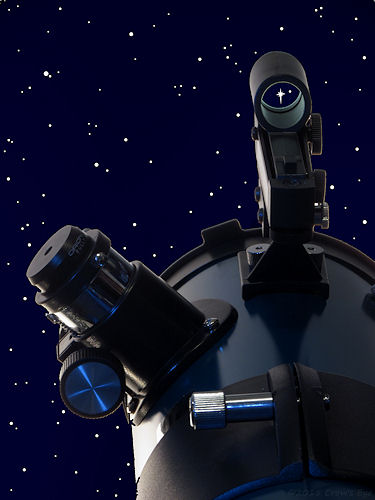
I watched the eclipse almost from beginning to end through my 4.5" Orion Star-Blast telescope, employing a solar filter designed expressly for viewing sunspots. I noticed a little grouping of them near the limb of the sun as the Moon's shadow darkened the solar disk, although I did not see any prominences. The temperature dropped substantially and the crows kept cawing throughout the event, but the cats were unfazed, and my two neighbours never even came outside.
Tuesday, January 13, 2015
Sky Watch
Day 92: You might think that astronomy was an odd hobby for someone in the Pacific Northwest to want to take up, but with the approach of Comet Lovejoy, my desire for a good telescope was renewed. However, for the last two weeks, I've found myself wishing for a giant fan to blow the clouds away, and I was beginning to fear that any occasion for viewing the comet would be doomed by overcast conditions. I was watching the weather report closely, but NOAA seemed to have a very different definition for "partly cloudy" than what was happening in my sky. My fears were turning to despair until yesterday when I finally saw blue. However, by late afternoon, clouds had reappeared.
After walking nine miles, I ate dinner and treated myself to a hot bath and a cup of decaffeinated tea. What happened next was as certain as death and taxes: I sat down in my chair and promptly fell asleep. When I woke up, it was almost bedime. The desire to crawl under the covers was strong, but I felt I really needed to check sky conditions, so I stepped outside in my nightie and looked up to see Orion, big as life, and the Pleiades as well. Those were just the pointers I needed to find Lovejoy! But I couldn't detect it with my naked eye, nor could I find it with binoculars. I was sure I was looking in the right spot, so I went back into the house, pulled on jeans and a fleece jacket, and carted a card table and the telescope out into the back yard. In an exceptional display of foresight, I had re-sighted the LED star-finder that afternoon after fiddling it out of whack by turning the wrong knobs when trying to turn it on. I pointed the LED at the target location and put my eye to the eyepiece. It was only necessary to pan a little bit before a fuzzy blob of light entered my field of view. I centered the comet in the 'scope and carefully changed eyepieces for a higher magnification which allowed me to distinguish the nucleus, if only faintly. I did not move up to the Barlow doubler because the comet nearly filled the field (it would have made a fuzzy object bigger but fuzzier). Needless to say, I was ecstatic with my "discovery," and now I'm anxious for the next astronomical event. After all, Lovejoy was a surprise to everyone.
Tuesday, December 30, 2014
Took The Leap
Day 78: When I turned sixteen, there was only one thing I wanted for my birthday: a telescope. Money was tight in those days, but when a long, skinny box showed up shortly after Christmas, I knew my request had been met. On the morning of my birthday, I tore into the wrappings with great excitement and spent the rest of the day peering through the limited optics of a $29 Tasco. I was thrilled, and spent much of my young adulthood looking at the moon and trying to make out the faint rings of Saturn.
As the years progressed, I moved across the country and the Tasco went into storage, forgotten until more than forty years later when I bought my present home. Like the Bubble Tree whose story was told earlier this month, my precious telescope had spent too much time in an unheated outbuilding, and the mirrors were damaged by moisture and cold, beyond any reasonable hope of repair. I told myself I'd get another one some day, but by then, I had learned enough about the subject to know I didn't want to waste my money on a cheap department-store model.
There were some stellar events which almost pushed me to a purchase. I'd seen the naked-eye spectacle of Comet West in 1976, and when Hale-Bopp came around in 1997, I observed it through binoculars, still reluctant to make the leap into serious astronomy, even at the entry level. But with Lovejoy on the horizon (literally, at this latitude), that old desire for a 'scope resurfaced.
It's easy to Clint-Eastwood yourself out of your price range when you're considering a telescope. "For a few dollars more," you can get clearer optics, a wider field of view, finer adjustments, etc. and so forth until you find yourself talking in four figures instead of three. At that point, you have to step back and ask yourself what you really need. Are you going to be searching for heretofore undiscovered deep-sky objects? Not likely! But do you really want to look for nebulae and galaxies, or would you be content to see a few double stars? Since my primary interests are comets, planets, lunar features and sunspots, I looked for a telescope which would give me the best possible viewing of those objects on a limited budget. After reading dozens of reviews and conferring with my "pet astronomers," I settled on the Orion StarBlast 4.5 reflector, present-to-self for a reprise of the occasion of that first acquisition.
Labels:
astronomy,
Barlow,
birthday,
moon filter,
Orion StarBlast,
solar filter,
star chart,
telescope
Wednesday, August 27, 2014
A Visit To Starry Hill
Day 331: Heading north on Hwy 7 from the Eatonville Triangle, you come 'round a corner and begin a descent into Ohop Valley. Not long before you reach the intersection with Peterson Road, you can catch the briefest glimpse of the dome of Starry Hill Observatory near the crest of the ridge on the opposite side of the valley. Below, the land is protected from development by the Nisqually Land Trust and a proposed State Park. Above, the vault of the heavens rises, devoid of light pollution except at its lower edge. The Milky Way flows through the night like a river and thousands upon thousands of stars shine to be seen over a celestial panorama not visible from the cities. It was my great privilege to have been invited to a "star party" at Starry Hill Observatory last night, an event which kept me up well past bedtime and was worth every second of lost sleep.
Guests from Mount Rainier National Park's Interpretive Division gathered near sundown to await darkness, and were given an introduction to telescopes of various sizes and shapes before being taken into the planetarium for a display/sky map of our proposed targets. Key points for locating the stars and galaxies listed on our "passports" were explained in detail, most using an asterism called the Summer Triangle as a guide. Although I'd owned a small Tasco telescope when I was a teenager and had an interest in astronomy, the Summer Triangle was a new one to me. That was the first of my discoveries for the night, and from then on, I learned at every step.
Assisted by three teen-aged "star guide" interns, Tom and Gracie Pauly took their guests on a fantastic ramble among the stars. My favourite of the night was Albireo, a double-star system boxed within the Summer Triangle. Next was the Wild Duck Cluster, a grouping of stars so dense that through the eyepiece, it seemed there was more light than darkness. This cluster is the "missing pearl" in the String of Pearls (a constellation which will now be obvious to me when I see it again).
Later in the evening, small groups were escorted into the observatory to observe the process of astrophotography. One of the star guides brought the Whirlpool Nebula to the screen and captured it in a 90-second exposure.
Starry Hill Observatory is a private organization, dedicated to bringing science to kids (or rather, bringing kids to science). The enthusiasm of the star guides is a testament to their success at the project. And this kid, grey-haired though I may be, had the time of her life exploring the night sky in a fabulous new experience. Thank you so much, Tom and Gracie!
Labels:
Eatonville,
star party,
Starry Hill Observatory,
telescope
Subscribe to:
Posts (Atom)